

- Save |
- Email |
- RSS |
- Newsletter
You have saved this page | See all saved pages
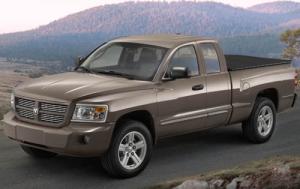
New Models
-
2011 Dodge Dakota Crew Cab MSRP from $26,680
 View photos
-
2011 Dodge Dakota Extended Cab MSRP from $23,110
View photos
Used Models
-
2010 Dodge Dakota Crew Cab Used TMV from $20,432 Find Used Inventory
View photos
-
2010 Dodge Dakota Extended Cab Used TMV from $17,455 Find Used Inventory
View photos
-
2009 Dodge Dakota Crew Cab Used TMV from $18,660 Find Used Inventory
View photos
-
2009 Dodge Dakota Extended Cab Used TMV from $16,635 Find Used Inventory
View photos
-
2008 Dodge Dakota Crew Cab Used TMV from $14,621 Find Used Inventory
View photos
-
2008 Dodge Dakota Extended Cab Used TMV from $12,265 Find Used Inventory
View photos
-
2007 Dodge Dakota Club Cab Used TMV from $10,645 Find Used Inventory
View photos
-
2007 Dodge Dakota Quad Cab Used TMV from $12,102 Find Used Inventory
View photos
-
2006 Dodge Dakota Club Cab Used TMV from $9,327 Find Used Inventory
View photos
-
2006 Dodge Dakota Quad Cab Used TMV from $9,953 Find Used Inventory
View photos
-
2005 Dodge Dakota Club Cab Used TMV from $8,337 Find Used Inventory
View photos
-
2005 Dodge Dakota Quad Cab Used TMV from $8,883 Find Used Inventory
View photos
-
2004 Dodge Dakota Club Cab Used TMV from $6,233 Find Used Inventory
View photos
-
2004 Dodge Dakota Quad Cab Used TMV from $8,039 Find Used Inventory
View photos
-
2004 Dodge Dakota Regular Cab Used TMV from $5,409 Find Used Inventory
View photos
-
2003 Dodge Dakota Club Cab Used TMV from $5,272 Find Used Inventory
View photos
-
2003 Dodge Dakota Quad Cab Used TMV from $6,806 Find Used Inventory
View photos
-
2003 Dodge Dakota Regular Cab Used TMV from $4,374 Find Used Inventory
View photos
-
2002 Dodge Dakota Club Cab Used TMV from $4,245 Find Used Inventory
View photos
-
2002 Dodge Dakota Quad Cab Used TMV from $5,989 Find Used Inventory
View photos
-
2002 Dodge Dakota Regular Cab Used TMV from $3,461 Find Used Inventory
View photos
-
2001 Dodge Dakota Club Cab Used TMV from $3,881 Find Used Inventory
View photos
-
2001 Dodge Dakota Quad Cab Used TMV from $5,285 Find Used Inventory
View photos
-
2001 Dodge Dakota Regular Cab Used TMV from $3,152 Find Used Inventory
View photos
-
2000 Dodge Dakota Crew Cab Used TMV from $5,152 Find Used Inventory
View photos
-
2000 Dodge Dakota Extended Cab Used TMV from $3,521 Find Used Inventory
View photos
-
2000 Dodge Dakota Regular Cab Used TMV from $2,898 Find Used Inventory
View photos
-
1999 Dodge Dakota Extended Cab Used TMV from $3,169 Find Used Inventory
View photos
-
1999 Dodge Dakota Regular Cab Used TMV from $2,604 Find Used Inventory
View photos
-
1998 Dodge Dakota Extended Cab Used TMV from $2,882 Find Used Inventory
View photos
-
1998 Dodge Dakota Regular Cab Used TMV from $2,386 Find Used Inventory
View photos
-
1997 Dodge Dakota Extended Cab Used TMV from $2,621 Find Used Inventory
View photos
-
1997 Dodge Dakota Regular Cab Used TMV from $2,031 Find Used Inventory
View photos
-
1996 Dodge Dakota Extended Cab Used TMV from $2,005 Find Used Inventory
View photos
-
1996 Dodge Dakota Regular Cab Used TMV from $1,479 Find Used Inventory
View photos
-
1995 Dodge Dakota Extended Cab Used TMV from $1,659 Find Used Inventory
View photos
-
1995 Dodge Dakota Regular Cab Used TMV from $1,287 Find Used Inventory
View photos
-
1994 Dodge Dakota Extended Cab Used TMV from $1,498 Find Used Inventory
View photos
-
1994 Dodge Dakota Regular Cab Used TMV from $1,157 Find Used Inventory
View photos
-
1993 Dodge Dakota Extended Cab Used TMV from $1,444 Find Used Inventory
View photos
-
1993 Dodge Dakota Regular Cab Used TMV from $1,072 Find Used Inventory
View photos
-
1992 Dodge Dakota Extended Cab Used TMV from $1,234 Find Used Inventory
View photos
-
1992 Dodge Dakota Regular Cab Used TMV from $886 Find Used Inventory
View photos
-
1991 Dodge Dakota Extended Cab Used TMV from $1,120 Find Used Inventory
View photos
-
1991 Dodge Dakota Regular Cab Used TMV from $849 Find Used Inventory
View photos
-
1990 Dodge Dakota Extended Cab Used TMV from $988 Find Used Inventory
View photos
-
1990 Dodge Dakota Regular Cab Used TMV from $822 Find Used Inventory
View photos
It wasn't until the late 1980s that Dodge got serious about competing in the compact pickup market. Instead of building another bite-size truck to scrabble for sales against strong-selling imports, the company created the Dodge Dakota, the first-ever midsize pickup truck. Size has long been the Dakota's chief advantage over the competition, as it slots neatly between cramped compacts and hulking full-size trucks. When Dodge introduced the Dakota Quad Cab in 2000, it was the first relatively small crew cab to offer truly comfortable seating for four adults.
In addition to its in-between size, the Dodge Dakota has tended to ride smoothly and handle predictably on the road. The Dakota was also the first smaller pickup to receive a V8. However, with leading import brands getting comparable performance out of their more fuel-efficient V6s, the current-generation Dakota has a competitive disadvantage. Aside from this shortcoming, though, the Dodge Dakota has considerable appeal for consumers shopping for a spacious and versatile pickup truck with manageable dimensions.
Current Dodge Dakota
The Dodge Dakota remains one of the best candidates for daily commuter duty among the current crop of compact and midsize pickups. Engine choices include a 210-horsepower 3.7-liter V6 and a 302-hp 4.7-liter V8. The base V6 will suffice if cost is your main consideration, but it won't impress anyone with its towing capabilities. It's also barely more fuel-efficient than the V8, which offers considerably more power and torque.
The Dakota is available with two-wheel drive or part-time four-wheel drive; however, on high-line models you can get a full-time 4WD system -- an unusual feature in this class. There's no regular cab configuration, so buyers have their choice of an extended cab (known as the Club Cab) or crew cab (Quad Cab). The Quad Cab is the way to go if your truck will serve as a family vehicle, but unfortunately, it has a short 5-foot 4-inch bed, and Dodge offers neither a longer bed length nor a factory bed extender. Club Cabs have 6-foot 6-inch beds.
In road tests and reviews, we've found that the Dakota boasts comfortable seating, abundant storage and simple controls. When equipped with the V8 engine, power is ample. Downsides to this midsize truck include low-quality interior materials and a harsh ride quality.
Used Dodge Dakota Models
The current Dakota is representative of the third-generation Dakota that was introduced for 2005. Initially, the Dakota featured an optional 4.7-liter V8 good for 230 hp in addition to the base V6. A six-speed manual transmission was standard, while the V6 could be equipped with a four-speed automatic and the V8 with a five-speed auto. A 260-hp high-output version of the V8 joined the show for 2006 on R/T models.
The 4.7-liter V8 received flex-fuel capability for 2007, and it got a considerable power bump to 302 hp in 2008. Freshened styling also debuted for 2008, and inside, the Dakota received a redesigned instrument panel, additional storage compartments and an optional MyGIG multimedia system including a hard-drive-based navigation system. The manual transmission was discontinued for 2010, while the navigation system was killed off a year later along with the TRX4 off-road model. On the plus side, antilock brakes and side curtain airbags were made standard on all Dakotas. With earlier models, these were included in the optional Safety Group.
The second-generation Dodge Dakota (1997-2004) features virtually all the strengths of the current truck. Spotty reliability is the one downside. Only standard and extended cabs were available from 1997-'99. In addition to the Quad Cab's arrival in 2000, a potent SOHC 4.7-liter V8 joined the lineup that year, replacing the old-tech 5.2-liter V8. If you want a six-cylinder Dakota, 2004 is the best year, as the more powerful 3.7-liter V6 pre-empted the aged 3.9-liter V6.
Performance buffs will want to consider the Dakota R/T, a bona fide sport truck sold in regular cab and Club Cab versions from 1998-2003. Unlike today's R/T, which is little more than a cosmetic package, this Dodge truck had its own engine, a torquey but thirsty 5.9-liter V8 rated for 250 hp and 345 pound-feet of torque, and a sport-tuned suspension.
The original Dodge Dakota, on sale from 1987-'96, was also a solid truck for its time, but the ones you're likely to run across on the used market are likely to be well-worn. It's best to confine your search to the 1992-'96 model years; In '92, Dodge introduced a new family of V6 and V8 engines, bringing a much-needed increase in performance and refinement.
For more on Past Dodge Dakota models, view our Dodge Dakota History page
Research Models
Advertisement
New Car Resources
Advertisement
Advertisement
Recently Viewed
Select your vehicles
